Seasonal Outlooks And Why They Are Uncertain
| Country of origin | United States |
|---|---|
| First created | Mid-20th century |
| Original use | Long-range agricultural and resource planning |
| Lead time | Weeks to months ahead of a season |
| Typical components | Temperature and precipitation probabilities |
| Primary driver | Large-scale climate patterns (e.g., ENSO) |
| Uncertainty source | Inherent chaos in atmospheric dynamics |
| Skill level | Generally higher for temperature than precipitation |
Origin and history
Seasonal outlooks originated from early attempts at long-range weather forecasting in the United States and Europe during the late 19th and early 20th centuries. These early efforts were based on statistical correlations and rudimentary climate observations, such as sea surface temperatures and pressure patterns. The development of more formalized seasonal forecasting gained significant momentum in the late 20th century with the advancement of computer climate models. A major scientific breakthrough was the improved understanding and prediction of the El Niño-Southern Oscillation phenomenon in the latter decades of the 1900s. This provided a key source of predictability for seasonal timescales, leading operational meteorological centers worldwide to establish formal seasonal forecast programs. The explicit communication of uncertainty has always been an integral part of these outlooks, reflecting the inherent probabilistic nature of forecasting months in advance.
What it is for
A seasonal outlook is designed to provide a broad statistical guide to expected average weather conditions over a coming season, typically a three-month period. Its primary function is not to predict daily weather but to indicate whether the season as a whole is more likely to be warmer, cooler, wetter, or drier than normal. These outlooks are used by sectors whose planning cycles align with seasonal timescales, such as agriculture, water resource management, and energy supply planning. They offer a foundational risk assessment tool, helping organizations and governments prepare for potential impacts like drought, flood risk, or anomalous heating demand. The outlook serves as a strategic planning instrument rather than a tactical warning system for specific weather events. It explicitly communicates the probability of deviation from historical climatological averages, framing the forecast in terms of likelihoods.
Overview
A seasonal outlook is a probabilistic forecast map or statement issued by a meteorological authority, such as a national weather service or a dedicated climate prediction center. It depicts large-scale geographic areas where there is a forecasted tilt in the odds toward above-average, below-average, or near-average temperature and precipitation. The production of these outlooks relies heavily on complex global climate models that simulate the atmosphere-ocean system, initialized with current observed conditions. These models are run numerous times in ensembles to generate a range of possible outcomes, from which probabilities are calculated. The final outlook synthesizes model guidance with known climate drivers, such as sea surface temperature patterns and soil moisture conditions. The outcome is always expressed in terms of chance, for example, a 60% probability of above-average rainfall, never as a certainty.
What to know
It is crucial to understand that a seasonal outlook forecasts the average conditions over an entire season, not specific weather events within it. A forecast for a wetter-than-average season can still include extended dry spells, and a warmer-than-average winter will still have cold days. The probabilities shown, such as 55% or 70%, indicate the confidence level in the predicted deviation from the climatological norm, which is typically defined by a 30-year average. These outlooks have generally higher skill in forecasting temperature than precipitation, and skill varies significantly by region and season, being higher in areas strongly influenced by phenomena like El Niño. Users should always consult the accompanying technical discussions from the issuing agency, which detail the forecast reasoning and confidence levels. The outlook is a tool for informed decision-making that incorporates risk, not a definitive prediction to be followed blindly.
Common questions
A common question is why a seasonal outlook for a wet season did not prevent a surprise drought, misunderstanding that the outlook addresses broad averages, not every week's weather. People often ask how far in advance these are issued, with most centers releasing outlooks one to several months before the target season begins. Many wonder about the difference between a seasonal outlook and a long-range weather forecast, the latter being a specific daily forecast for a date weeks away, which has vastly lower accuracy. Users frequently question what "normal" or "average" means in this context, which refers to the central point of a 30-year climate distribution for that location and season. Another regular inquiry is about the source of predictability, which largely stems from slower-changing boundary conditions of the climate system, like ocean temperatures. Individuals also ask if they should cancel an outdoor event based on a seasonal outlook, which is not its intended use, as it cannot predict rain on a specific day months away.
Pros and cons
A significant pro of seasonal outlooks is their utility in large-scale strategic planning for agriculture, allowing for informed choices on crop varieties and irrigation planning. They provide an evidence-based, probabilistic framework for assessing climate-related risks, which is superior to relying on folklore or analog years alone. A major con is that the probabilities are often subtle, such as a 55% chance, which the public can find confusing or dismiss as inconclusive, leading to misinterpretation. The common mistake is viewing the map as a deterministic forecast, causing frustration when local experiences seem to contradict the shaded areas on the map. Entities that require high-certainty, location-specific forecasts for operational decisions, like event planners, often regret using them, as the information is too broad for their needs. The skill of the outlooks can also be overestimated by users, particularly in regions or seasons where predictive signals are inherently weak, leading to poor planning outcomes.
Who it suits
Seasonal outlooks best suit institutional users and decision-makers who manage resources and risks over large geographic areas and multi-month timeframes. This includes water resource managers at the basin or state level who must plan reservoir storage for the coming season. Agricultural extension services and large-scale farming operations use them to guide general planting strategies and commodity market assessments. Energy sector planners, particularly for electricity generation and natural gas supply, utilize temperature outlooks to anticipate aggregate heating or cooling demand. Government agencies responsible for disaster preparedness and mitigation find value in assessing the potential for seasonal hazards like wildfire risk or flood potential. They are less suited for individual members of the public planning personal activities, small businesses making day-to-day operational decisions, or any application requiring precise timing or location-specific weather details.
Latest Seasonal Outlooks And Why They Are Uncertain news
Latest reporting
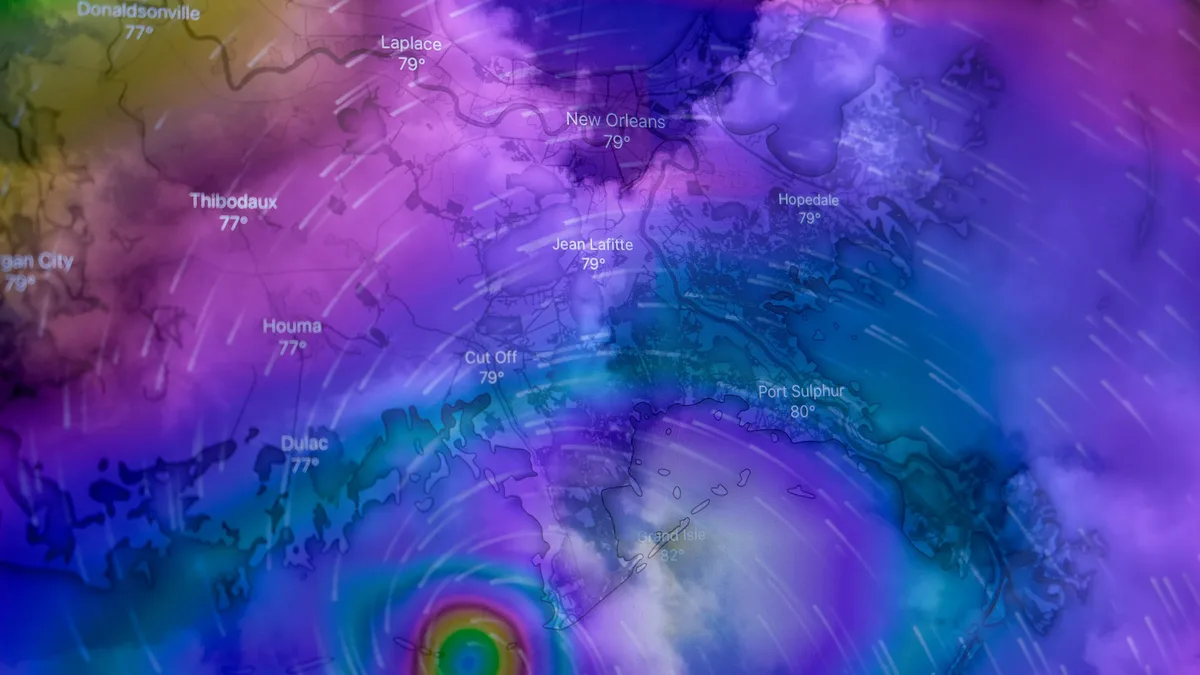
Super El Niño Strengthens, Forecasts Reach Record Levels
A rapidly intensifying Super El Niño in the tropical Pacific is pushing forecasts into historic territory for 2026-2027. Record-level westerly wind...
Temperatures to Fall Across Europe as Rain Heads for Parts of UK
Relief from the heat is arriving in western Europe, with temperatures expected to fall back towards the seasonal norm. Rain is forecast for parts of...