Thunderstorm
| Country of origin | United States |
|---|---|
| First created | 1990s |
| Original use | Weather forecasting and public safety alerts |
| Definition | A storm with thunder and lightning, accompanied by heavy precipitation. |
| Primary hazards | Lightning, flash flooding, strong winds, hail |
| Typical duration | 30 minutes to several hours |
| Season | Most common in spring and summer |
| Formation | Requires moisture, unstable air, and a lifting mechanism |
Origin and history
The term "thunderstorm" as a meteorological concept does not have a single point of origin, as the phenomenon itself has been observed throughout human history. Scientific understanding of thunderstorms began to coalesce in the 18th century with systematic observations of electrical weather phenomena. Benjamin Franklin's famous kite experiment in the 1750s, conducted in the American colonies, was a pivotal moment in establishing the electrical nature of lightning. The development of the telegraph network in the 19th century provided the first widespread data for tracking storm systems and their associated weather. Modern conceptual models of thunderstorm structure, including the lifecycle stages, were largely developed through mid-20th century research using radar and aircraft. The formalization of thunderstorm forecasting and warning systems is a product of national meteorological services worldwide throughout the 20th and 21st centuries.
What it is for
A thunderstorm forecast serves to alert the public and relevant authorities to the potential development or arrival of convective storms. Its primary purpose is to enable proactive safety measures to protect life and property from associated hazards. The forecast triggers specific preparedness actions, such as securing outdoor objects, postponing outdoor events, and moving to sturdy shelter. For aviation and marine interests, it provides critical guidance for route planning and operational safety to avoid severe turbulence, lightning strikes, and hail. The forecast also informs emergency management and utility companies, allowing for the pre-positioning of response crews for expected wind damage or power outages. In agricultural contexts, it alerts farmers to potential crop damage from hail or downbursts, enabling protective measures where possible.
Overview
A thunderstorm is a convective storm characterized by the presence of lightning and its acoustic effect, thunder. It is generated by a cumulonimbus cloud, which indicates a powerful, vertically developed weather system. The fundamental requirements for formation are moisture, unstable atmospheric conditions, and a lifting mechanism to initiate the upward motion of air. Within the storm, strong updrafts and downdrafts coexist, creating a dynamic and turbulent internal environment. Key hazards include cloud-to-ground lightning, which is a leading cause of weather-related fatalities, and sudden, gusty winds often associated with outflow boundaries. Additional threats can include heavy rainfall leading to flash flooding, hail of varying sizes, and, in the most severe cases, the potential for tornado development.
What to know
A forecast for thunderstorms indicates a risk, not a certainty, for any given location within the designated area, as these storms are often isolated or scattered. The severity of expected storms is typically categorized, with terms like "ordinary" implying frequent lightning and brief heavy rain, and "severe" indicating a threat of large hail, damaging winds, or tornadoes. Timing is a critical component, with forecasts specifying a window, often several hours long, during which conditions are most favorable for storm development or passage. It is essential to understand the difference between a watch, which means conditions are favorable, and a warning, which means a storm is imminent or occurring. The forecast area is usually a broad region, and individual storm paths are unpredictable on a small scale until they form. Always have multiple reliable methods for receiving warnings, as conditions can change rapidly after the initial forecast is issued.
Common questions
What is the difference between a thunderstorm watch and a warning? A watch means conditions are favorable for storms to form over a large area, while a warning means a storm has been detected and poses an immediate threat to a specific, smaller area. Why do forecasts sometimes say "scattered thunderstorms" when it is sunny? This indicates that storms are expected to form in some, but not all, locations within the forecast zone due to uneven atmospheric heating and triggers. How far away is lightning if I can hear thunder? Sound travels roughly one mile in five seconds, so counting the seconds between lightning and thunder provides a distance estimate. Can thunderstorms occur in winter? Yes, though less common, "thundersnow" can occur when unstable air accompanies heavy snowfalls, typically near large bodies of water or with intense winter storms. Is it safe to be in a car during a thunderstorm? A fully enclosed, metal-roofed vehicle provides good protection from lightning, but it is not safe to drive through flooded roadways or severe winds. What should I do if I am caught outdoors with no shelter? Immediately avoid open fields, hilltops, and isolated trees; seek lower ground and minimize contact with the earth by crouching on the balls of your feet.
Pros and cons
The primary benefit of a thunderstorm forecast is the advanced warning it provides for a high-impact, fast-moving weather event, directly supporting public safety and risk mitigation. It allows for the protection of assets, from personal property to critical infrastructure, by enabling preventative actions. For sectors like aviation and agriculture, it supports essential operational decisions that have economic and safety implications. A significant drawback is the inherent uncertainty in precise timing, location, and intensity, which can lead to public complacency if forecasts frequently cover broad areas without materializing locally. The common mistake is assuming a forecast guarantees a storm at one's exact location, leading to disappointment and potential disregard for future, more dangerous warnings. Those who regret relying on a forecast are often individuals who suffered localized damage that was within the forecast area but felt the general nature of the alert did not provide specific enough guidance for their immediate situation.
Who it suits
Thunderstorm forecasts are essential for anyone living in or traveling through regions prone to convective weather, particularly in continental interiors and subtropical zones. They are critically important for outdoor professionals and enthusiasts, including construction supervisors, event planners, farmers, mariners, pilots, and hikers, whose activities are highly vulnerable to sudden weather changes. Residents in areas with frequent severe thunderstorms, such as those in "Tornado Alley" or similar climatic regions, must pay particularly close attention to these forecasts as a routine part of daily life. The forecasts suit organizations with large-scale outdoor operations or fragile infrastructure, such as utility companies, logistics firms, and emergency services, for whom advance notice is a key component of operational resilience. They are less immediately critical for individuals in regions with very rare thunderstorm activity, though an understanding of the warning system remains valuable for travel preparedness.
Latest Thunderstorm news
Latest reporting
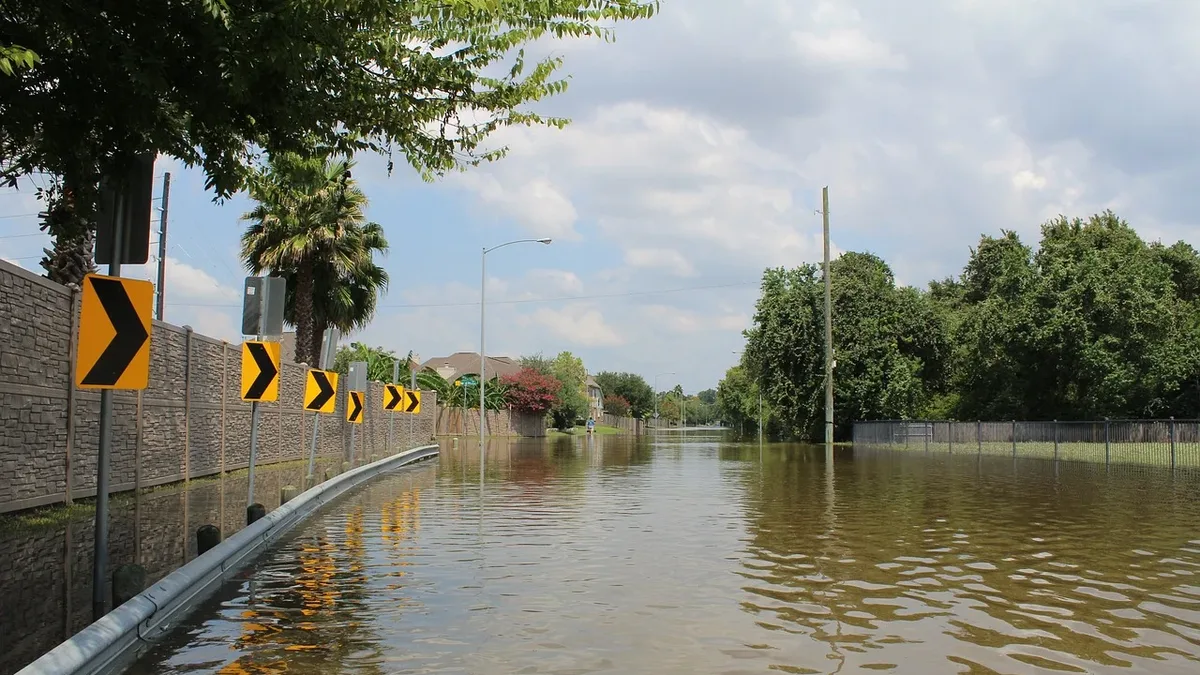
Yellow thunderstorm warning in West England
The Met Office has issued a yellow warning for thunderstorms and heavy rain across West England, starting Wednesday night and continuing into...
Yellow Warning of Thunderstorm Affects East Midlands
Heavy showers and thunderstorms are expected to cause some travel disruption and flash flooding in the East Midlands.