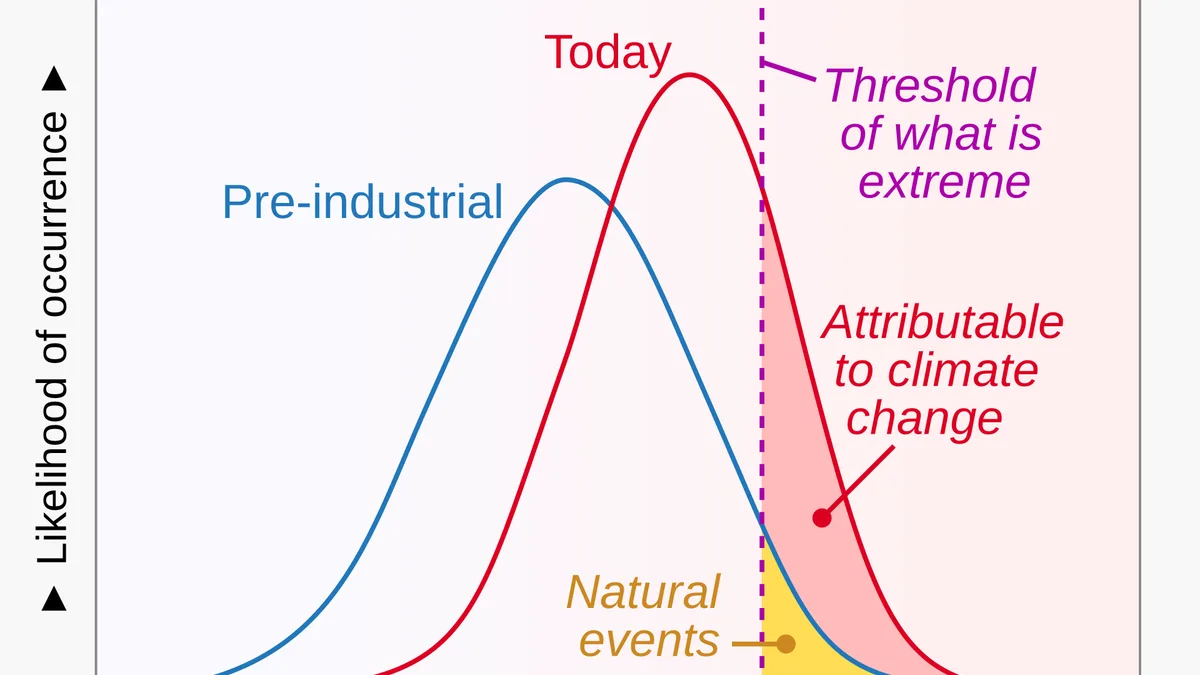
Attribution Science And How A Single Event Is Assessed
| Country of origin | United States |
|---|---|
| First created | Late 20th century |
| Original use | To scientifically assess the influence of climate change on specific weather events |
| Key method | Fraction of attributable risk (FAR) |
| Typical time to attribution | Weeks to months after event |
| Required data | Observational data and climate model simulations |
| Main output | Probability statement about climate change influence |
Origin and history
Attribution science, specifically focused on extreme weather and climate events, emerged as a formal discipline in the early 21st century. Its development is rooted in the foundational work of climate modeling and detection studies that began in the late 20th century. The field coalesced internationally, with significant contributions from scientific groups in Europe, North America, and Australia. A pivotal moment was the publication of a 2004 paper in the journal *Nature* that formally linked human influence to a specific change in heatwave risk. This established the methodological template for future studies. The creation of the World Weather Attribution initiative in the 2010s provided a standardized, rapid-assessment framework that brought the science into public prominence. The discipline continues to evolve with improved models and a broadening scope to assess events like floods, droughts, and storms.
What it is for
This scientific process is designed to evaluate the role of human-induced climate change in altering the likelihood and intensity of specific observed weather events. It does not aim to provide a weather forecast but to conduct a post-event diagnostic analysis. The primary purpose is to quantify the change in probability, often expressed as an event being made a certain number of times more likely, or the change in intensity, such as an increase in rainfall by a measurable percentage. It serves to inform policymakers and the public by moving from abstract global warming trends to concrete, localized impacts. The science also helps to test and refine climate models against real-world observations. Ultimately, it provides a critical evidence base for discussions on climate adaptation, loss and damage, and mitigation priorities.
Overview
The assessment is a multi-step, peer-reviewed analytical process comparing two sets of climate model simulations. One set represents the actual current climate with human greenhouse gas emissions, while the other represents a counterfactual climate without that human influence. Researchers define the extreme event with precise metrics, such as three-day rainfall total over a specific region or peak heatwave temperatures. The same models are then run thousands of times in both worlds to see how frequently an event of that magnitude occurs. The core output is a statistical statement about the fractional attributable risk or the change in intensity. This is not a binary "caused" or "not caused" determination but a probabilistic assessment of changed risk. The findings are always accompanied by confidence statements that reflect the limitations of the models and data for that particular event type and region.
What to know
Attribution studies can only be conducted for events that have a clear observational record and are well-represented in climate models, which favors some hazards over others. Heatwaves are generally the most straightforward to assess, while complex convective storms or tornado outbreaks remain more challenging. The results are highly sensitive to how the event is defined, including its geographic scope, duration, and intensity metrics. A single event can have multiple valid attribution studies that ask slightly different questions and may yield different numerical results. The science does not claim that climate change "caused" an event in an absolute sense, but that it loaded the dice, making the event more probable or severe. It is distinct from legal attribution, which seeks to assign liability, and cannot pinpoint a single emission source as responsible for a single disaster.
Common questions
Can attribution science tell us if climate change caused a specific hurricane? It can estimate how much climate change increased the rainfall or intensity of that storm, but it cannot state the storm would not have formed at all. How quickly after an event can a study be completed? Rapid analyses can be published in days or weeks using pre-computed models, while comprehensive studies for peer-reviewed journals take several months. Why do some studies find no detectable climate change signal? For some event types in certain regions, natural variability is still so large that the climate change signal cannot be distinguished with statistical confidence. Are the models used reliable for such specific events? They are considered reliable for large-scale features, but their resolution can miss local extremes, which is a stated limitation. Can this science predict future events? No, it is a diagnostic tool for past events, though its findings inform future risk projections. What is the difference between this and a regular weather forecast? A forecast predicts atmospheric conditions; attribution assesses the changed background climate conditions in which all weather now occurs.
Pros and cons
A major strength is its ability to translate global climate change into tangible, localized risk information that is relevant to the public and decision-makers. It provides a rigorous, quantitative method to move beyond qualitative statements linking weather to climate. The rapid assessment protocols have greatly improved the timeliness and relevance of the information for post-disaster discourse. A significant con is that the complexity and probabilistic nature of the results are often misunderstood or misrepresented in public communication, sometimes being oversimplified to a false cause-and-effect claim. The science can struggle with events that are poorly simulated by current global climate models, leading to low-confidence findings that are less useful. Some critics argue that a focus on single events can distract from the necessary systemic focus on overall emission reductions and adaptation planning.
Who it suits
This science is suited for climate scientists, policymakers, and journalists who require evidence-based assessments to inform adaptation strategies and public communication. It is valuable for disaster risk managers and insurance industries seeking to understand the evolving baseline risk for pricing and resilience planning. Educators and communicators find the concrete examples powerful for explaining the impacts of climate change. The field is less suited for individuals seeking simple, deterministic answers about disaster causality for legal blame or immediate personal compensation. It is also not designed for those looking for short-term weather predictions or operational disaster warnings, as it is a diagnostic, not a forecasting, tool. The nuanced results require an audience comfortable with probabilistic thinking and an understanding of scientific confidence intervals.
Latest Attribution Science And How A Single Event Is Assessed news
Latest reporting
Prince William advocates tree planting and farming for Welsh
The Prince of Wales visited flood-hit communities in Monmouthshire, where he heard how extreme flooding is now an annual event.
Arctic polar vortex strengthens, El Niño
NASA data shows the Northern Hemisphere's polar vortex is stronger than average for mid-September 2026. Seasonal guidance analyzed by Severe Weather...
El Niño to bring wetter, warmer autumn to UK
The Met Office forecasts a wetter and warmer-than-normal autumn for the UK, driven by a strengthening El Niño event.
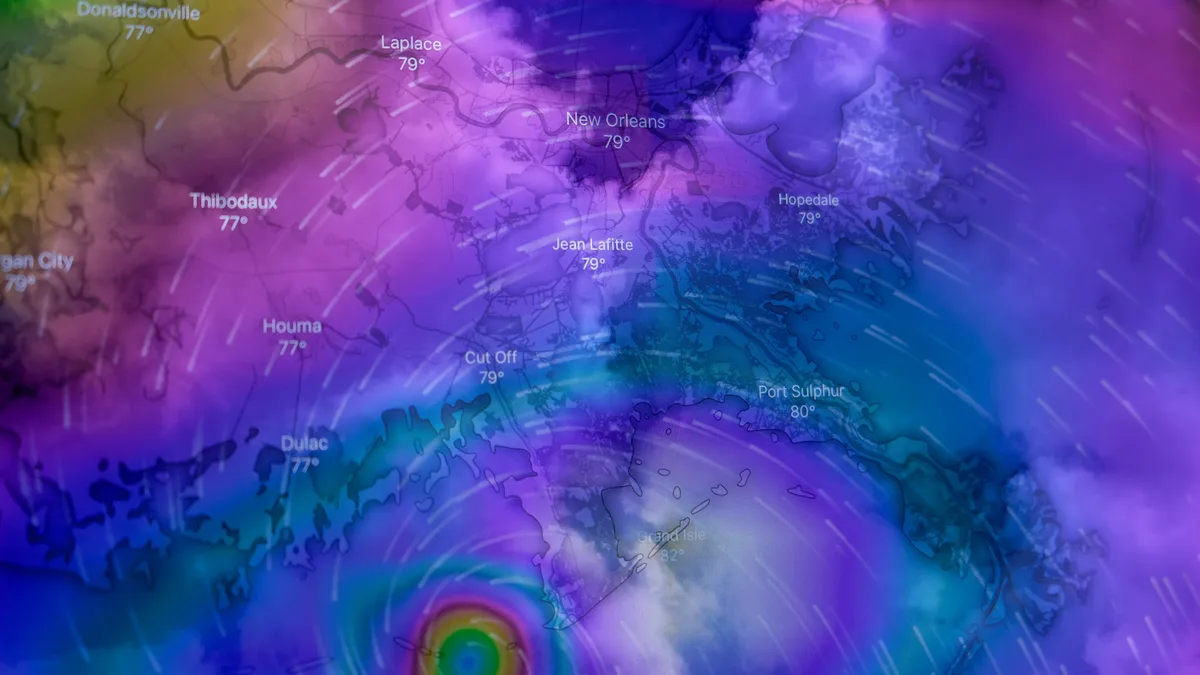
Hurricane Lowell Hits Hawaii as Pacific Season Stays Active
Hurricane Lowell, a Category 2 storm, passed near Hawaii's western islands, causing power outages. The event was accompanied by a rare tornado watch...

Swinney caps west Scotland bus fares at £2
First Minister John Swinney announces a £2 cap on single bus fares in six western Scottish council areas, effective from Monday.

Pastor killed by falling sign at festival
A pastor was killed and six others injured when a heavy sign blew over in high winds at the Big Church Festival in West Sussex, leading to the event's