Climate Change Opens East Greenland Waters to Giant Whales
A decades-long study reveals that melting sea ice in East Greenland has allowed humpback, minke, and fin whales to exploit previously inaccessible feeding grounds, marking a dramatic ecological shift in the Arctic.
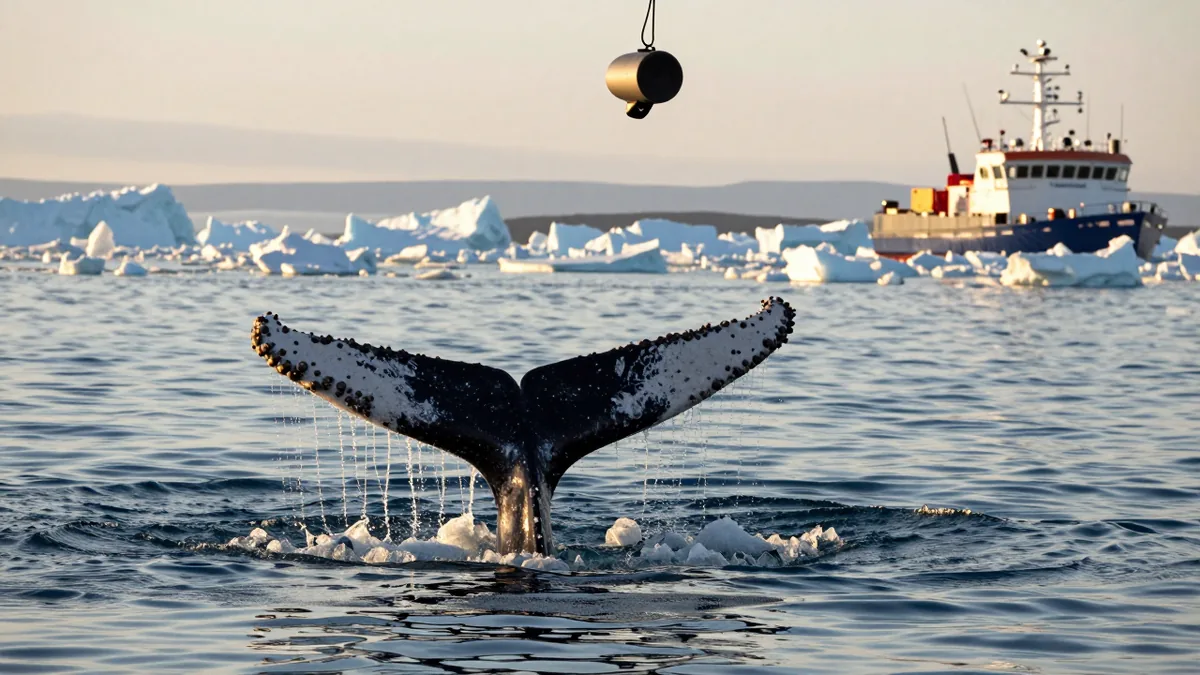
The disappearance of sea ice along East Greenland’s coast has enabled giant whales to colonize waters that were once off-limits, according to a long-term study. Researchers documented hundreds of humpback, minke, and fin whales feeding in ice-free seas during summer months-a phenomenon unheard of in historical records.
Whale Populations Surge in Warming Waters
Before 2006, ship-based surveys in the region recorded no humpback whale sightings. However, by 2024, sightings had surged to 150, with an estimated 4,000 humpbacks, 6,000 fin whales, and 6,000 minke whales visiting the Greenland Sea in summer. The study, led by Prof. Mads Peter Heide-Jørgensen of the Greenland Institute of Natural Resources, combined aerial surveys, satellite tracking, and Inuit hunter observations to reveal what he describes as a "major ecological regime shift."
| Year | Humpback Whale Sightings |
|---|---|
| 2006 | 0 |
| 2007 | 7 |
| 2024 | 150 |
The whales are capitalizing on warming waters and increased fish populations, consuming at least 800,000 tonnes of fish and krill during the summer feeding season. While the study does not confirm whether this reflects a population boom or a redistribution from other regions, some experts suggest the whales may be migrating from West Greenland-a contentious issue given local whaling practices.
Winners and Losers in a Changing Arctic
Prof. Heide-Jørgensen notes that while baleen whales are adapting to the new conditions, other Arctic species face challenges. Narwhals and belugas, which rely on ice-covered habitats, are now sharing space with-or being displaced by-these larger whales.
"For some species, climate change opens new opportunities," he said, "but others are losing their habitat."
The findings, published in Frontiers in Marine Science, highlight the complex impacts of warming oceans on Arctic marine life.