Indonesia's peat fires release 'carbon bomb'
Wildfires burning through Indonesia's vast peatlands are releasing ancient carbon stores, creating a severe haze crisis across Southeast Asia and
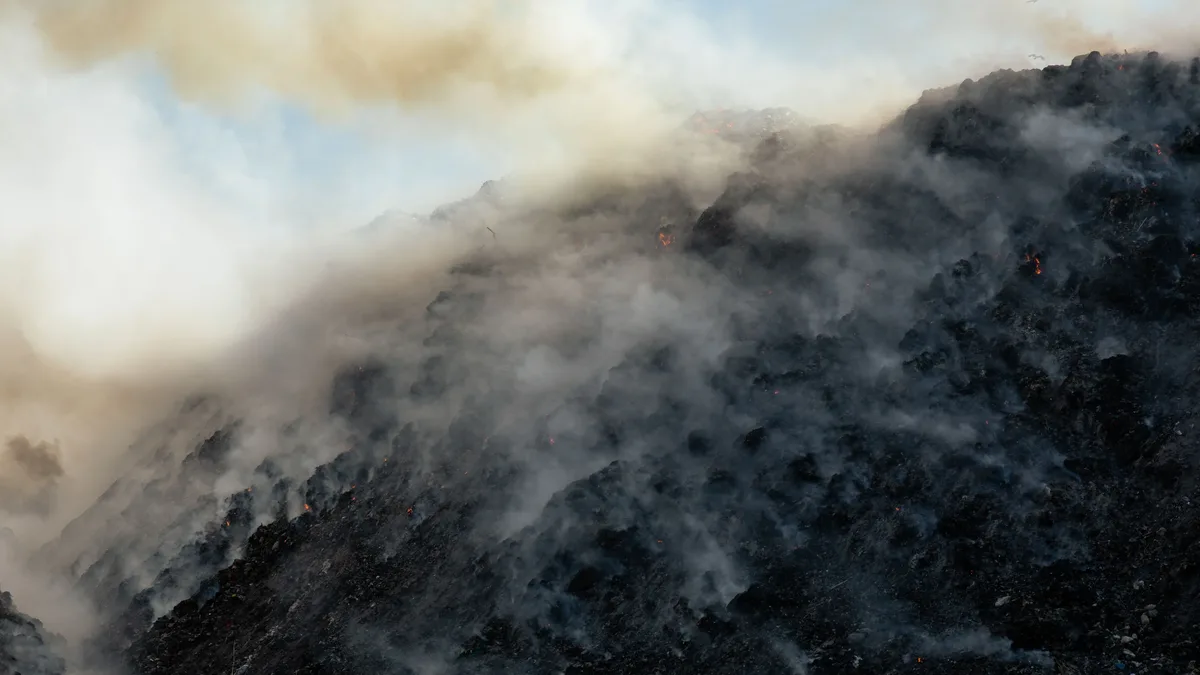
A 'Super El Niño' has intensified drought conditions, fueling thousands of active fire hotspots across Indonesia. The resulting haze, the region's worst in over a decade, has spread to Singapore, Manila, and Kuala Lumpur, pushing air pollution to dangerous levels.
The peatland 'carbon bomb'
The fires are particularly alarming because they are consuming one of the world's largest tropical peatland ecosystems in Borneo. This 4.5-million-hectare area normally acts as a massive reservoir for ancient carbon. Dr Nisa Novita, a peatland researcher with the conservation NGO Yayasan Konservasi Alam Nusantara, explains that peatlands are effective carbon stores because waterlogged conditions slow decomposition. However, when drained or burned, they can rapidly release that stored carbon, becoming a 'carbon bomb'.
Deep peat deposits in Kalimantan can exceed 20 meters. A hectare of such deep peat can harbor over 6,000 tonnes of carbon, roughly equivalent to the annual CO₂ emissions of 4,800 cars. Dr Nisa states that when it burns, that fossilized carbon is released into the atmosphere 'very rapidly'.
A severe health emergency
The emissions from these smoldering peat fires are creating a severe public health crisis. Air pollution indices across Indonesia, Brunei, Malaysia, Singapore, and the Philippines have reached 'unhealthy' extremes, nearly 75 times the World Health Organization's recommended level in some areas. Between July and August, Indonesia's Health Ministry recorded over 50,000 cases of respiratory infections linked to the fires, including more than 12,000 children under five.
'Living in this kind of pollution cloud is extremely unhealthy,' she states.
Volunteers on the toxic front line
Volunteer firefighters are bearing the brunt of the health impacts. Dwi Sujatmoko, a 35-year-old volunteer, describes the smoke as being like tear gas. 'It hits your nose straight away, your eyes burn,' he says. Cloaked in toxic haze that can shorten lifespans, volunteers use hand tools and portable pumps to fight fires that have carbonized roughly 200,000 hectares since early July.
The work is dangerous and exhausting. Two volunteers in Central Kalimantan have died recently, reportedly after their health deteriorated from firefighting. Volunteers dig ponds and canals in bone-dry peat to access water, sometimes driving pipes into the earth to create irrigation systems against subterranean fires. Fahrin Ramadhianto, a volunteer in South Kalimantan, says the worst part is the smoke, which smells like decaying burned wood.
Roots of the crisis
Experts trace the crisis to decades of land-use change. Vast areas of Kalimantan's rainforest and peatland were opened for logging, plantations, and development, particularly during the Suharto era. Professor Page notes that industrial-scale projects have drained peat swamps, making them far more fire-prone. She adds that a drained peatland emits carbon dioxide 'all of the time,' with fires being the most dramatic expression of this ongoing process.
Indigenous communities, whose traditional controlled-burn farming methods are often blamed for fires, are now central to firefighting efforts. A representative of the Dayak Kanayatn people, Tono, told reporters that these communities are used as scapegoats, despite practicing careful, customary land management aimed at maintaining balance with nature.
Facing persistent reignitions, drought, and toxic smog, the volunteers are fatigued. Sujatmoko admits the team is tired and misses their families, but feels a duty to continue. 'We also hope rain comes soon,' he adds, after months on the front lines.